
Area and Perimeter Basics
Year 3 learn to find the perimeter and area of simple shapes.
# Area and Perimeter Basics
Two of the most useful ideas in geometry are area and perimeter. They help us measure the size of shapes, from a book cover to a whole field. This lesson explains what each one means and how to find them.
What Is Perimeter?
The perimeter is the distance all the way around the outside of a shape. To find it, add the lengths of all the sides. For a rectangle five centimetres long and three centimetres wide, the perimeter is five plus three plus five plus three, which is sixteen centimetres.
What Is Area?
The area is the space inside a shape. We measure area in square units, such as square centimetres. For a rectangle, multiply the length by the width. A rectangle five centimetres long and three centimetres wide has an area of fifteen square centimetres.
Perimeter or Area?
A common mix up is confusing the two. A simple way to remember is that perimeter is the fence around a field, while area is the grass inside it. If the question asks how much space is covered, it is area. If it asks how far around, it is perimeter.
Counting Squares
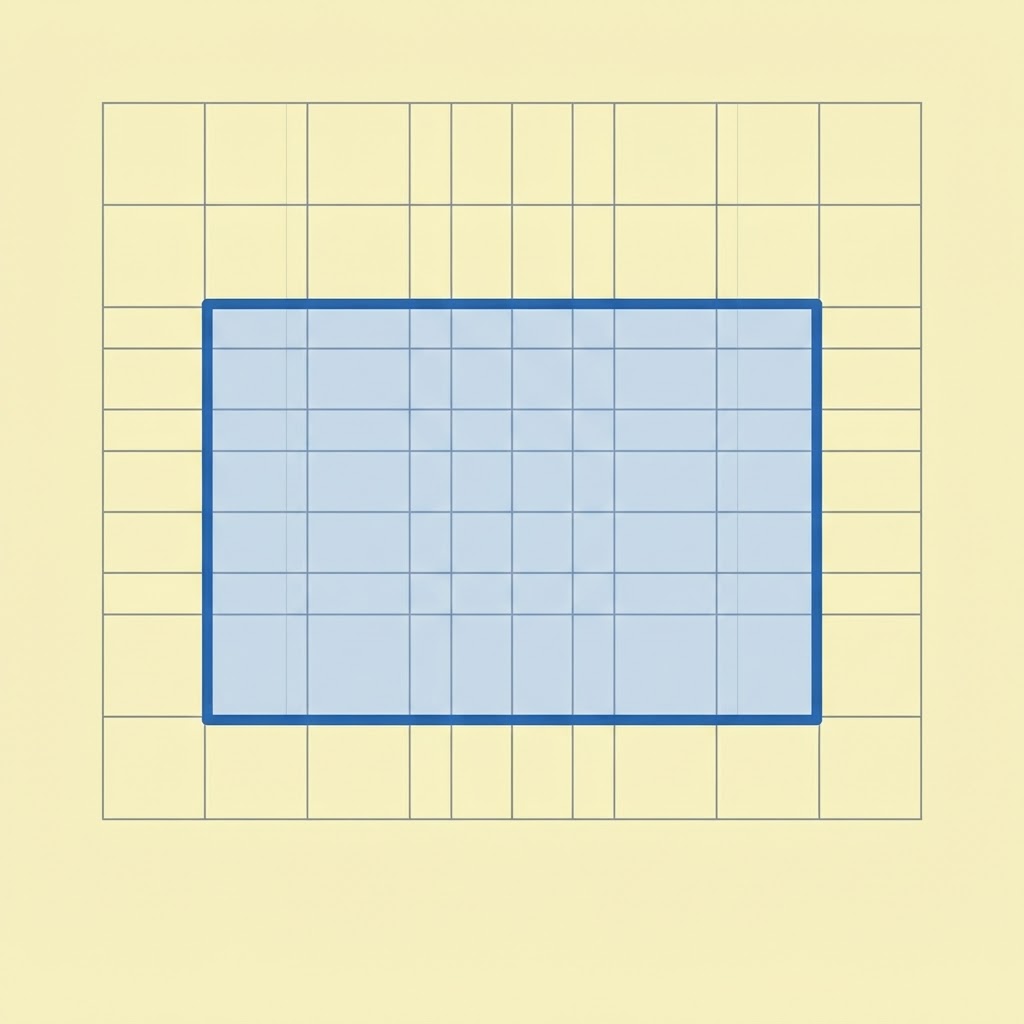
For simple shapes drawn on squared paper, you can find the area by counting the squares inside. This is a great first step before learning the rule of multiplying length by width. It also shows why we use square units for area.
Real Life Uses
Area and perimeter are useful every day. We use perimeter to buy fencing for a garden and area to buy carpet for a floor. Helping with a real job at home makes these ideas feel real rather than abstract.
Related Resources
Need worksheets for this topic? Generate a personalised worksheet or browse our collection.