Symmetry and Reflection
Year 3 explore line symmetry, reflection and symmetry in nature.
# Symmetry and Reflection
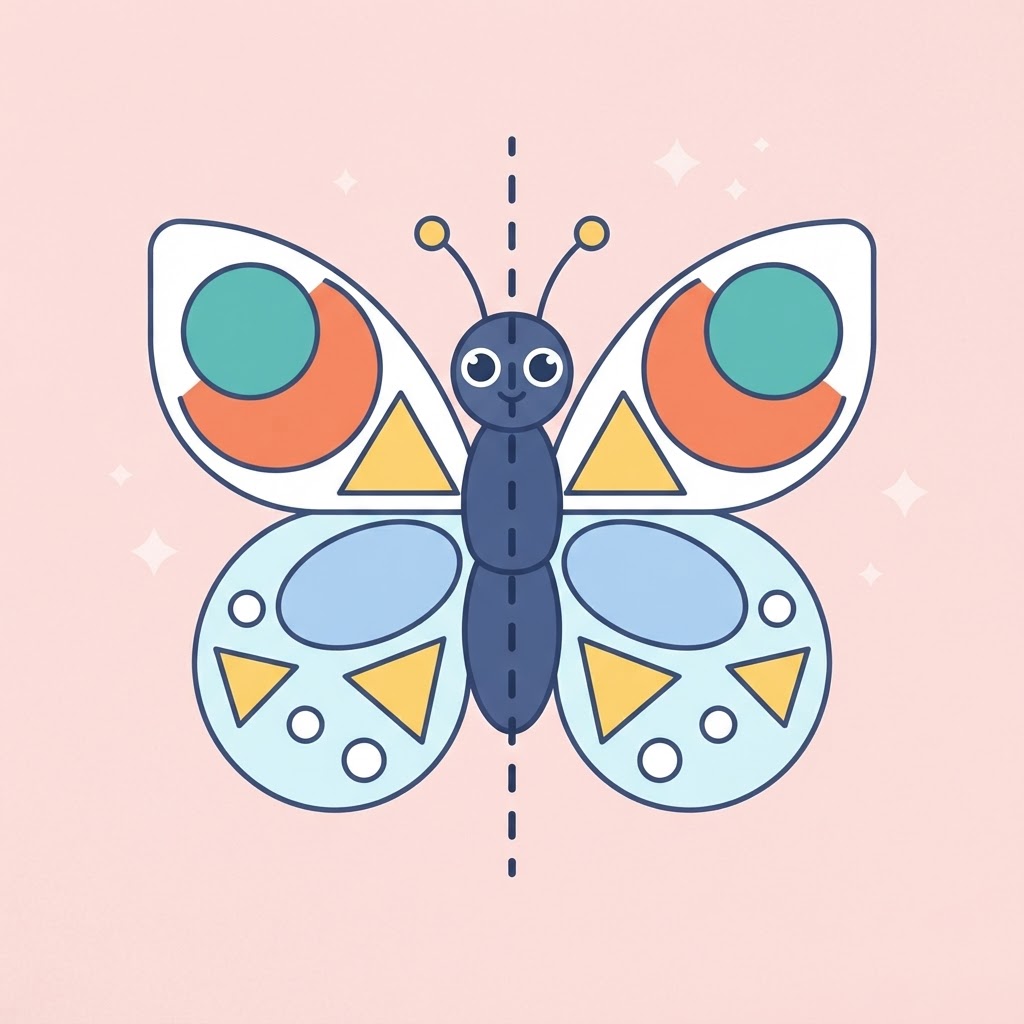
Symmetry is a beautiful part of geometry. A shape has line symmetry if you can fold it along a line and the two halves match perfectly. Understanding symmetry helps children with art, design and even reading letters.
Lines of Symmetry
The line you fold along is called the line of symmetry. A square has four lines of symmetry. A rectangle has two. An equilateral triangle has three. A circle has countless lines because it can be folded along any line through its centre.
Checking for Symmetry
To check if a shape has line symmetry, draw a line through it and imagine folding. If both halves match, the line is a line of symmetry. You can also use a small mirror placed on the line to see if the reflection completes the shape.
Reflection
A reflection is a flipped copy of a shape across a line. The reflection is the same size and shape, but it faces the other way, like a mirror image. Letters like A and T have a vertical line of symmetry, while B and C have a horizontal one.
Symmetry in Nature
Symmetry is all around us. Butterflies, leaves and snowflakes show beautiful symmetry. Looking for symmetry in nature helps children see that geometry is not just on paper. It is a pattern the world follows.
Making Symmetrical Pictures
Fold a piece of paper, paint on one half, then fold again to print a symmetrical picture. This is a fun way to explore the idea. You can also draw half a shape and ask your child to complete the other half.
Related Resources
Need worksheets for this topic? Generate a personalised worksheet or browse our collection.