
Types of Angles
Year 3 learn about right, acute and obtuse angles and how to spot them.
# Types of Angles
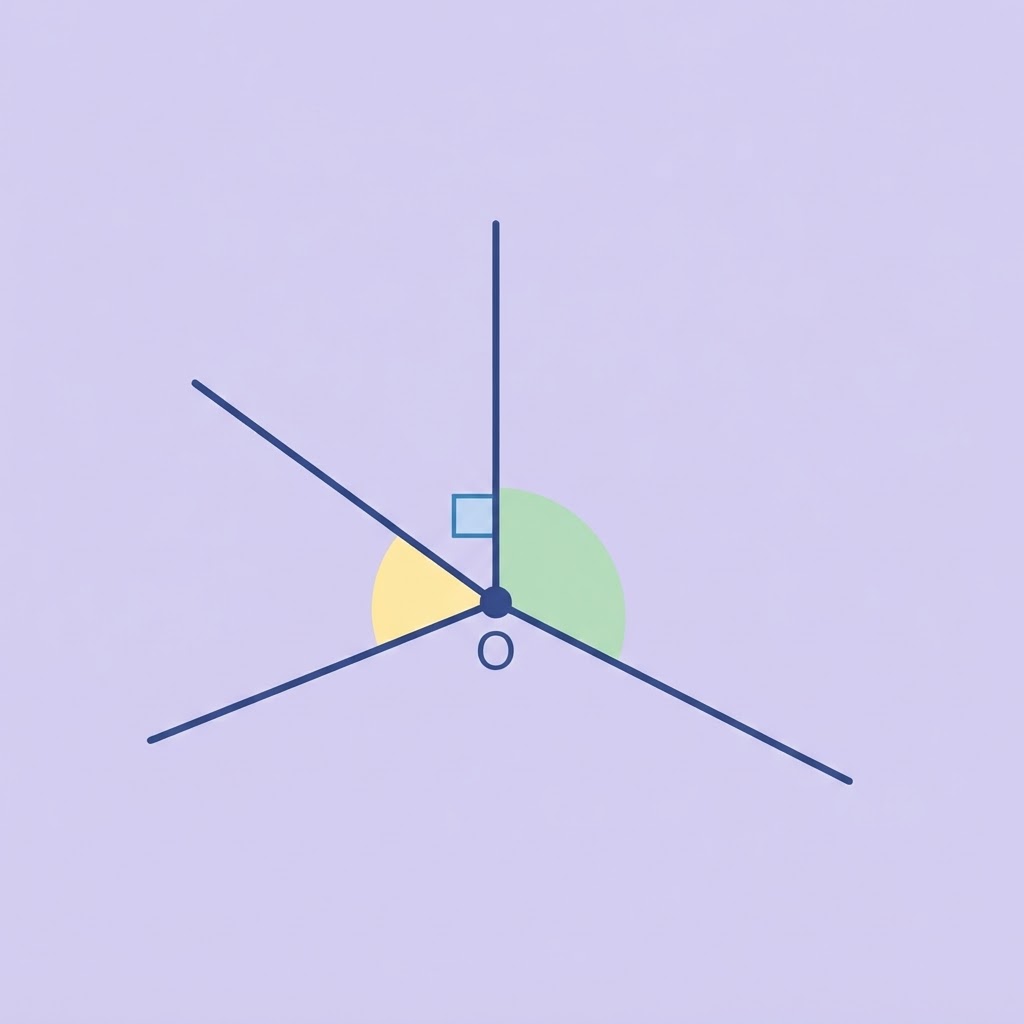
An angle measures how much two lines turn at a point. Angles are everywhere, from the corner of a book to the hands of a clock. This lesson introduces the three main types of angle children need to know.
Measuring in Degrees
We measure angles in degrees. A full turn is 360 degrees, a half turn is 180 degrees and a quarter turn is 90 degrees. The most important angle to remember is the right angle of 90 degrees. All other angles are compared to this one.
Right Angles
A right angle is exactly 90 degrees, like the corner of a square or a rectangle. You can check for a right angle using the corner of a piece of paper or a set square. Right angles are the benchmark we compare other angles against.
Acute Angles
An acute angle is smaller than 90 degrees. The word acute means sharp, and these angles look pointy. The corner of a slice of pizza is often an acute angle. Anything less than a right angle is acute.
Obtuse Angles
An obtuse angle is bigger than 90 degrees but smaller than 180 degrees. Obtuse means blunt, and these angles look wide and open. The angle made by an open book lying flat is usually obtuse.
Spotting Angles
Look around your home for each type of angle. Clocks are brilliant for this, as the hands make new angles every minute. Naming the angles you see helps the vocabulary stick and prepares children for measuring angles with a protractor.
Related Resources
Need worksheets for this topic? Generate a personalised worksheet or browse our collection.